

Four everyday levers · food, water, movement, sleep
Healthy Habits That Support Men’s Energy
Supplements sit on top of a routine, so this page covers the routine. Food, movement, sleep, and water are the four areas where small changes show up fastest — and that is exactly why they come first.
Surabaya · everyday routine · breakfast hour
The order that works
Nothing here is exotic, and that is the point
A daily routine is the base that natural supplements for men are meant to sit on, not replace. When meals are regular, water is steady, and sleep has a fixed hour, you can actually tell whether a formula is adding anything. When the basics are scattered, a product gets credit or blame it did not earn.
Read the four chapters below in order, or jump to the one that is weakest in your week right now. Each one is short, uses food and habits you already have access to, and gives a test you can run for fourteen days.
Start small
Build the week around two changes
Most habit plans fail because they ask for eight changes at once. Pick two, hold them for two weeks, then add.
Change one
A fixed bedtime — the same hour on weekdays, within thirty minutes at weekends. Sleep is the lever that makes the other three easier to keep.
Change two
A walk after dinner — fifteen to twenty minutes, no pace target, no gear. It doubles as the evening routine that winds the day down.
A routine with two stable elements beats a detailed plan abandoned by Thursday. Keep a note on the fridge with the two habits and a box for each day; the tick is the whole system. Once both hold for fourteen days, add a third — water is the usual next candidate. And because two habits are easier to keep than eight, there is room left over for any supplement routine to work alongside something consistent.
Food
Protein, vegetables, and regular meals
Aim for a protein source at each main meal, since it supports normal muscle function and keeps you full longer. Rice, tempeh, tofu, eggs, fish, and chicken are all ordinary options in an Indonesian kitchen, and none of them require a specialty shop or a bigger grocery budget.
Add vegetables at two meals a day and fruit once. Skipping meals is the more common problem than choosing the wrong ones, so regularity comes first and refinement later. If your day usually runs from coffee to a late lunch, moving breakfast earlier by an hour will do more than swapping any single ingredient.
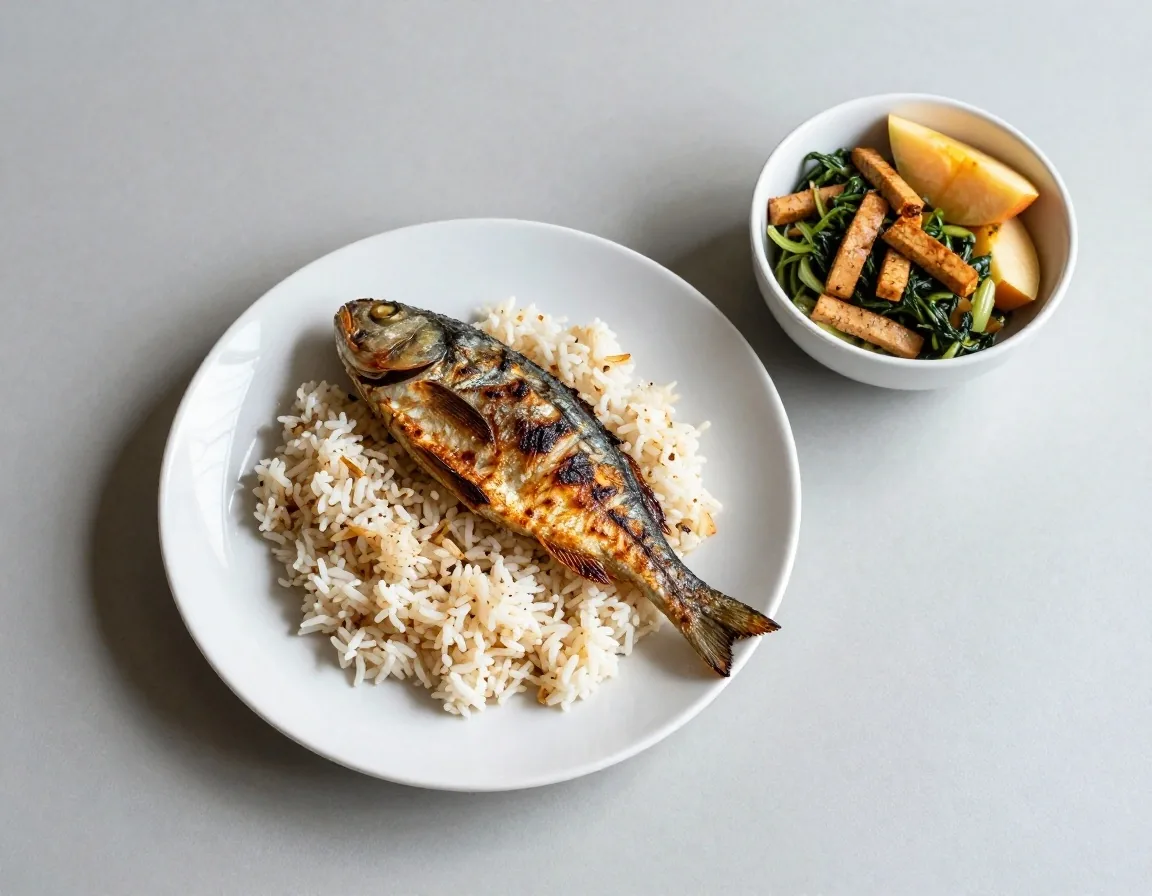
Rice, fish, greens, tempeh · lunch
A protein source at each main meal, vegetables at two meals, fruit once. The meal itself is unremarkable — that is what makes it repeatable.
Meal one
Breakfast within two hours of waking. Eggs, rice, or a rice porridge with an egg; add fruit if mornings are usually rushed.
Meal two
Lunch with a protein and vegetables. This is the meal most working days get wrong because it happens at a warung with no planning.
Meal three
Dinner lighter than lunch, finished two to three hours before bed. Heavy late meals and good sleep tend to argue with each other.

Water
Water through a hot working day
In Surabaya’s climate, water is a working tool rather than a detail. Keep a bottle on the desk and drink at set points: mid-morning, after lunch, mid-afternoon. Pale urine is a rough practical check, not a laboratory result.
Add more on days with training, outdoor work, or long commutes. Sweetened drinks and coffee are not the same thing as water even when they are wet — and the two or three coffees that carry a heavy day also carry a sleep cost that shows up the following morning.
A simple daily frame
- MorningA full glass when you wake, before coffee.
- MiddayOne bottle finished between breakfast and lunch.
- AfternoonA second bottle across the hottest hours of the day.
- EveningEnough to feel right, not enough to wake you at two.
Keep the bottle visible. Water you have to walk to the kitchen for is water you will forget by three o’clock.
Movement
Movement that fits a real schedule
Thirty minutes of brisk walking most days covers a lot of ground for general fitness. Add resistance work twice a week, using bodyweight, bands, or a gym if you have one nearby.
Build gradually. A sudden jump in volume is the usual reason people stop in week two. Endurance responds to consistency far more than to intensity, which is good news for a busy calendar.
Everyday
30 minutes
Brisk walking, split into two fifteen-minute blocks if the day is tight.
Twice weekly
Resistance
Squats, push-ups, rows, or a gym session — whatever you will actually repeat.
Build rate
Slow
Add volume only when last week’s load felt ordinary, not heroic.
What it buys
Stamina
Steadier daily energy, better sleep pressure, and a body that handles stairs well.
Sleep
Sleep and the evening routine
A consistent bedtime matters more than a perfect one. Keep the last hour calm, dim the lights, and leave the phone out of reach if you can. The room itself helps: a fan, a thin sheet, and a window that opens beat any elaborate setup in a warm climate.
Caffeine after mid-afternoon is a common reason for lighter sleep, and it is easy to test by cutting it for a week. Alcohol reduces sleep quality even when it shortens the time to fall asleep, so a late drink is usually traded against the following morning. If you wake unrefreshed after seven or eight hours for weeks, mention it to a qualified professional rather than stacking more products on top.
A fourteen-day sleep test
- Fix the hour. Same bedtime for fourteen nights, weekends included.
- Cut caffeine early. Nothing after two in the afternoon for the same two weeks.
- Loosen the last hour. Dim lights, no screens in bed, no heavy food close to sleep.
- Rate the mornings only. Note how you feel at seven, not how long you lay awake.

Bedside · the last hour · dim
The honest version
Alcohol, smoking, and what your own week shows
Cutting either down has a more visible effect on daily energy than most products on a supplement shelf. That is not a moral point, just what the evidence of your own week will show if you test it. Pick one, remove it for two weeks, and keep the habit note running.
Most men find that the first thing to shift is the morning — easier waking, a steadier mood before lunch, and less of a flat patch at four in the afternoon. None of that is dramatic, and that is what makes it believable. The change is small enough that you will notice it only because the rest of the routine is already stable.
Reduce, do not remove
Two drinks, twice a week, is a realistic ceiling to test. A hard zero often only holds for a weekend.
Watch the timing
Late-evening drinking hits sleep hardest. Moving the same drink to early evening changes the following morning.
Month two onward
Making it stick past month one
Track the habit, not the outcome. Tick off the walk, the bedtime, and the water bottle, and let energy follow on its own schedule. Tell someone at home what you are doing, since a second person makes a routine harder to quietly drop.
One
Keep the note where you will see it — fridge, bathroom mirror, or the top of the phone. A habit you have to remember to log is a habit you have already dropped.
Two
Name the two habits out loud to whoever shares the kitchen. Outside eyes catch the third week, which is where most quiet quitting happens.
Three
Add a supplement only when the basics have held for a few weeks, and judge it over the same kind of period. Two months of ordinary consistency tells you more than two days of feeling good.
Where supplements enter
A small addition, once the basics are stable
Once food, water, movement, and sleep have held for a few weeks, a daily vitamin and mineral formula or a modest energy blend can be a low-dose top-up rather than the main event. That order matters because it tells you what the product is actually contributing.
If your basics are inconsistent, changes you feel will be hard to attribute, and the product usually gets the credit or the blame unfairly. Read the ingredient list on the label, keep the same product for eight weeks, and follow the directions on the pack rather than adding extra.
Where to read next
-
Read the supplements guide
How to read an ingredient list before you buy anything.
-
Vitamins and minerals
What a daily men’s vitamin supplement typically provides, and what it does not.
-
See energy and endurance
The everyday-energy half of the label, explained in plain terms.
Straight answers
Common questions about habits
How long before habit changes show results?
Sleep and hydration often feel different within a week or two. Fitness and body composition take longer, usually several weeks of consistency. Judge the habit by whether you kept it, not by the mirror in week one.
Do I need a supplement while improving my habits?
Not necessarily. Many men cover their needs with food once meals are regular. A daily formula is a low-dose top-up, not a requirement, and it works best after the four chapters above have held for a few weeks.
Which of the four areas should I start with?
Start where the week is weakest. If the mornings are the problem, it is usually sleep; if the afternoons flat-line, it is usually food timing and water. Then add one more area and keep the note running for two weeks.
Keep going
Two habits are enough to start this week
Pick the fixed bedtime and the after-dinner walk, run them for fourteen days, and let the water bottle follow. When those hold, the guide on natural supplements for men and the everyday vitamins and minerals behind them will make more sense than they do today.
Visit or write
Jl. Basuki Rahmat No. 129, Embong Kaliasin, Genteng, Surabaya, Jawa Timur 60271
Monday to Friday, 09:00–18:00 WIB. Questions about a routine or a label are welcome — we answer in plain language and without pressure.
Supplements mentioned on this site are dietary products, not medicines. If a change in your health lasts for weeks, speak with a qualified professional before adding anything new.